.jpg)
Should I Trademark My YouTube Channel, TikTok Name, or Podcast Name?

Obligatory lawyer moment: I am an attorney, but I'm not your attorney and reading a blog post creates exactly zero attorney-client relationships. Legal stuff is wildly fact-specific and the rules love a plot twist, so treat this as general information and a helpful starting point, not legal advice. Got a real question about your channel or podcast? Talk to a lawyer about your specific situation.
Short answer: yes, you can trademark a YouTube channel name, TikTok handle, or podcast name — and if your content is becoming a brand (merch, sponsorships, a growing audience), you probably should. In trademark terms, your channel or show name identifies the source of entertainment services, which makes it registrable with the USPTO just like any product brand. What a trademark protects is the name as a brand: it gives you nationwide rights, a public claim of ownership, and real leverage against copycat channels, impersonator accounts, and knockoff merch.
What it does not do is hand you every matching username on every platform. More on that in a minute because it trips up a lot of creators.

Wait — a Channel Name Can Be a Trademark?
Yep. A trademark is any name, logo, or slogan that tells people who something comes from. Nike for shoes. Netflix for streaming. And your channel name for your videos, streams, or episodes.
When you consistently publish content under a name, you're providing what the USPTO classifies as entertainment services and the name can function as your brand. That's textbook trademark territory. Creators register channel names, podcast titles, gamer tags, and show names all the time. The big podcast networks trademark their shows for the same reason Disney trademarks its movies: the name is the asset.
The key concept is use in commerce, legalese for actually using the name in the real-world marketplace. For creators, publishing content under the name, selling merch, running sponsorships, or monetizing views generally counts. A name you've only doodled in a notebook doesn't. (If you haven't launched yet, there's a filing type for that so keep reading.)
What Does a Trademark Actually Protect for a Creator?
Here's the plain-English version of what a federal registration gets you, courtesy of the trademark attorneys at Markley:
Nationwide rights to the name for your kind of content. Without a registration, your rights are generally limited to where you've actually built a reputation. A registration claims the whole country.
A public "taken" sign. Your name appears in the USPTO database, which deters others from adopting it and blocks confusingly similar applications.
Platform enforcement power. YouTube, TikTok, Instagram, and Amazon all have IP complaint processes, and they move much faster for owners of registered trademarks. Impersonator account? Copycat channel? A registration number turns "please look into this" into a formal claim.
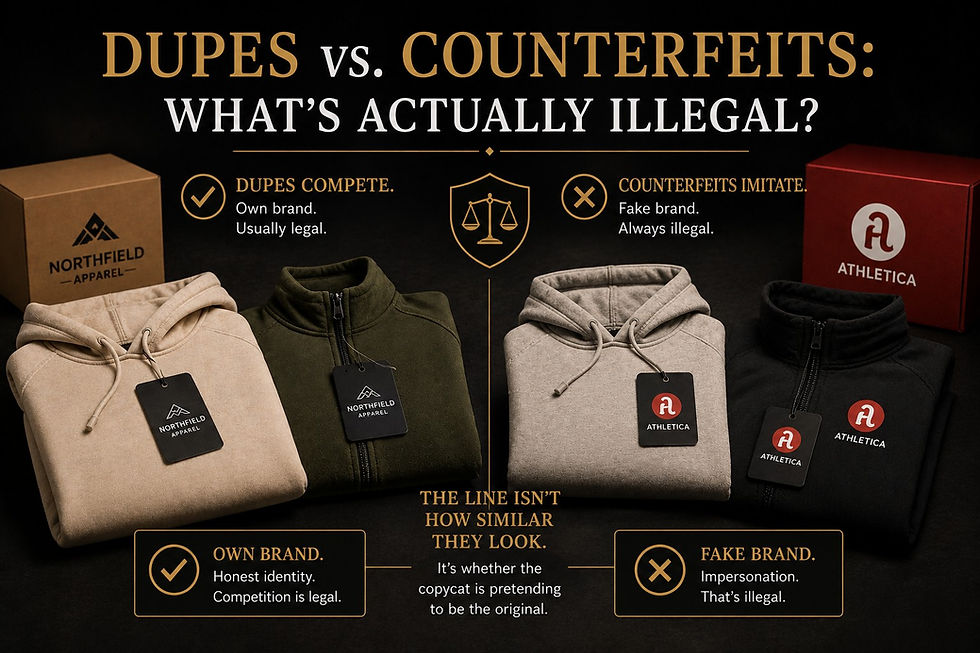
Merch protection. If your name is registered for apparel and someone starts selling bootleg hoodies, you have a direct infringement claim plus takedown tools on Amazon, Etsy, and print-on-demand sites.
A licensable, sellable asset. Sponsors, networks, and acquirers treat a registered mark as proof the brand is actually yours.
What a Trademark Won't Do (Read This Part)
A registration is not a magic username wand. It doesn't automatically:
Hand you the handle on a platform where someone else registered it first for legitimate, non-infringing use
Stop people with the same name in unrelated fields. Trademark rights are tied to categories. Your "Nightowl" gaming channel generally can't stop a "Nightowl" coffee brand since the test is likelihood of confusion, meaning: would people realistically think the two come from the same source?
Protect the content itself. Your videos and episodes are copyright's department. The name is trademark's department. You want both doors locked.
Which Trademark Classes Do Creators Need?
Trademark filings are organized into classes with categories of goods and services. Fees run per class, so this is where strategy matters. The usual creator lineup:
Class 41 (entertainment services): the core class for ongoing shows, videos, streams, and podcasts. If you file one class, it's usually this one.
Class 25 (apparel): the merch class such as shirts, hoodies, hats.
Class 9 (downloadable content): downloadable episodes, apps, and digital goods. Heads up: the international classification system was updated effective January 2026 with modernized language for digital and virtual products, so getting the wording right matters more than ever.
Most creators don't need every class on day one. File where you genuinely operate (or genuinely plan to), because you'll eventually have to prove use in each class you claim.
When Should I File — Before or After I Blow Up?
Before. Here's the uncomfortable truth: trademark problems scale with your success. Nobody bootlegs a channel with 200 subscribers. The moment you go viral, the copycats, squatters, and merch pirates show up and if you haven't filed, you're starting the race from behind.
If you're mid-rebrand or pre-launch, the USPTO lets you file an intent-to-use application which is legalese for "I'm not using this name commercially yet, but I genuinely plan to." It locks in your priority date now, and you prove actual use later. It's the trademark equivalent of calling shotgun.
And choose your name carefully: generic phrases and common expressions often get refused for what the USPTO calls failure to function meaning the phrase is something everybody says, so it can't point to one source. Even LeBron James couldn't register "Taco Tuesday"; the USPTO found it too commonplace for anyone to own. Distinctive, invented, or unexpected names make far stronger trademarks than clever-but-common ones.
How Much Does It Cost?
The USPTO's base filing fee is currently $350 per class. Add classes, add fees — Class 41 plus Class 25 is $700 in government fees before anyone touches attorney costs. The USPTO also charges surcharges for incomplete applications ($100/class) and custom goods descriptions ($200/class), which is where DIY filings quietly get expensive.
Markley's model is one flat fee which can include clearance search, attorney-prepared filing, office action responses, and the USPTO fee, all in. No hourly billing, no surprise invoices mid-season.
FAQ
Can I trademark my TikTok or Instagram handle?
Generally yes, if you use it as a brand for content or products. The handle functions like any other name. The registration protects the name; it doesn't automatically transfer usernames on other platforms.
Can someone else trademark my channel name out from under me?
It happens, and it's ugly. U.S. rights generally favor the first to use a name, but proving your earlier use against someone else's registration is slow and expensive. Filing first is dramatically cheaper than fighting later.
Do I need a trademark if my channel name is my real name?
You can often register a personal name that functions as a brand (with your consent on file), though names can face extra hurdles. Worth a conversation with an attorney.
Can I trademark my catchphrase?
Sometimes. Distinctive catchphrases used on merch or as a brand can be registered; common phrases usually fail the "failure to function" test. The more you-specific it is, the better your odds.
Podcast name vs. episode titles — what's protectable?
The show name generally is (it's the brand). Individual episode titles generally aren't for the same reason single book titles usually can't be registered.
You built the audience. Own the name. Markley files trademarks for creators including channel names, podcast titles, catchphrases, and merch lines with real attorneys, flat fees, and straight answers about whether your name is actually registrable before you pay to file. Made it? Mark it.